Showing posts with label advertising. Show all posts

Wednesday, 22 May 2013

Neuromarketing

Last night saw Thom Noble take to the stage at King's College London for Warc's Neuroscience event. An esteemed neuromarketer, Thom's work strives to better explain consumer behaviour and to predict what people are going to buy. Both concepts that are undeniably useful from an advertising perspective.

i would like to buy one
just the same as that
Traditional methods of market research have been able to measure the conscious but neuroscience aims to blend techniques in order to access the vast unknown territory of the non-conscious.

The role for planners would appear to be in generating ways of exploiting this data and in drawing insights from it and Thom feels that it is necessary for planners to develop the consultant side of the neuromarketing industry.

baby imitating facial movements
baby see, baby do
Bringing a wider range of senses to the evaluation of an effective piece of communication is a compelling idea and the field of mirror-neurons, which are said to explain the evolution of language, is an area of particular interest. It also happens to be a part of the brain that is supposedly easier to trigger in women. This is why women respond to faces and direct eye contact and all of a sudden every fashion mag I've ever flicked through makes sense.

Although what starts as a conscious thought and evaluation depreciates to something less conscious throughout a given task, it is impossible to totally switch off from the fact that your responses are being monitored. Even when the technology becomes smaller and more integrated this awareness will be unavoidable.

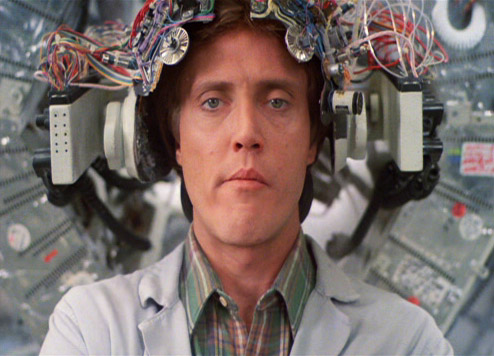
brainstorm
It reminds me of how Big Brother housemates become less able to keep up a front as the fact that their every move is being watched slips to the back of their minds. They are however, always conscious that they are in an artificial set up and this is a variable that cannot be controlled. Sci-Fi human guinea pigs just won't do the trick.

I believe that in its current state neuromarketing is at its most useful when combined with other forms of monitoring, such as social media, where it can be used in order to measure people's desire to share. Despite the massive recent advances in market research and neuroscience, these methods still have a way to go before the variables are minimised and the data that they produce provides reliable insights into the behaviour of the human mind.

For the time being I have to side with the neuro-sceptics and back the corner of the more philosophical, qualitatively backed ways of reaching into the minds of consumers.

You can find out more about Thom and his work on the Neurostrata website.
You can also see his presentation slides here.

Cited books:
Descartes' Error - Antonio Damasio
Unconscious Branding - Douglas Van Praet
Thinking Fast and Slow (of course) - Daniel Kahneman

Thursday, 28 March 2013

brand loyalty


I’m really interested in the concept of brand loyalty and the debate as to whether or not it actually exists. I thought I’d take a look into why I’m a massive fan of Sainsbury’s to find out where this affiliation stems from. I really do love Sainsbury’s, ask anyone.

Bonding with my dad - The ‘Big Shop’ in Camden? A nice sentimental idea and although the Supermarket Sweep-like run to get the things left on the list once we reached the end is a fond memory, it could, in theory have been any supermarket and this memory is specifically attached to the Camden Sainsbury’s, not to Sainsbury’s as a brand.

Is it Jamie Oliver’s perky little face? Unlikely.
Is it because I want to Live Well for Less? I love a bargain as much as the next person and fall time and time again for the age old 2 for 1 offers but we all know that Sainsbury’s is not the most “cost effective” way to do the groceries. Also, Try Something New Today is always the tagline that I associate with Sainsbury’s mostly due to it’s epic planning tale of how it came to be.


Is it the soothing satisfaction I get from systematically winding up and down each isle? Do I have a particular affinity with the colour orange? Is it because they “made reusable bags sexy” (their words)? Love me a bit of CSR but again, not enough to pick one brand in favour of another. Is it because I fit into their target audience of Female AB 25-34 35-44? Well, it may be a factor, what kind of strategist would I be if I belittled the importance of having a clear idea of who your audience is.

My feeling is that it’s convenience over brand loyalty. Wherever I move to it tends to be the closest supermarket. I may begrudge having to go to Tesco’s if I moved somewhere where it was closer but the fact is that that sentiment probably wouldn’t last that long and I would adapt, shifting my Nectar card to the back of my wallet.


It also seems to be about managing expectations and sticking with what you know. As Rory Sutherland (yes - referencing Rory again) points out; people don’t want the best hamburger in the world, they want the hamburger that is just like the hamburger they had the last time.

Saturday, 5 January 2013

bye bye h

what a climactic end to the year! in the same month that i acquire my master's in the art of advertising (Em M. MA) i have also come to the end of a three month placement at one of the world's most notorious agencies.

i really enjoyed my past few months at bbh. really enjoyed them, they flew by and i'm sad to have left.


i entered into bbh through their home grown scheme along with three other 'home growners' and was placed on the second floor in sprint (the office is divided up into six, sprint, mint and penthouse - it makes sense once you're in there...) my first tasks included researching how people are using nfc for barclaycard and delving into social media for virgin media. we were lucky enough to be given talks by both charlie rudd and jon peppiatt in our first week who gave us a sense of what bbh is about and the kinds of attributes they seek in the people that work there.

in my second month, as building work began and the agency transformed into a submarine, i was kindly taken under the wing of the research department on the premise that as a junior strategist the way that i could be most useful would be if i can find things quickly. richard helyar and his team opened up google a new for me as well as giving me a clear breakdown of their tools, including tgi, sysomos and warc. during this second month we also got a talk about insights from jim carroll (as mentioned in a previous post, a man who evokes huge respect), he explained the importance not only of condensing thought but also expanding it, setting tasks which may be worth a post in themselves.

throughout our time there we had the homegrown team, including abi and rishi, to go to with any concerns or queries and many other people were also generous with their time to have a coffee and impart their advice. i never took for granted the power of the minds in that building, as well as how nice everyone was. the old paradox of being good and friendly really holds true there (at least in my experience).

in my final few weeks i worked on a weekly digital zeitgeist for audi and a mobile thought piece for nick fell, which i'll be posting shortly. i also shadowed the prodigy that is tim jones. i helped him and the virgin media team on a commercial strategy and got to go to my first focus group.

the great thing about doing my placement at this time of year was that i got to go to the company meeting in the guardian building and the office christmas party. the less great thing is that it's not the best time for hiring and although it had always been made clear that there wouldn't necessarily be a job available, it would have been the perfect end to the year. i shouldn't have drunk so much of the kool-aid but this hopefully won't be the absolute end to my time there. as i said to john hegarty on my last day "i hope this is more 'au revoir' and not 'adieu'", yes, i actually said that to him. goals for 2013 include working on my inner monologue and being less awkward around advertising legends.

Friday, 26 October 2012

guardian summit summit

on wednesday jamie and i went to the guardian changing advertising summit. there was a great mix of interesting speakers and we have co-authored a post about the key themes that were covered.


have great content
yes, that one. perhaps the most obvious point became one of the most laboured points of the day; have great content. it would seem obvious to most that this is the absolute starting point, so i felt that we should get that out of the way quickly. it goes without saying that if you have great content, people will interact with it, they will share it, it will increase affection towards your brand. it’s worth noting about 5 different speakers drew reference to red bull’s stratos event – not that every brand has to send a man into space.

bruce daisley
be media agnostic
this point really leads on from having great content, a great, big idea can live in any platform. or as chris maples of spotify says “most of the rules are still the same, it just happens that the platforms have changed”. just because there are a variety of channels and platforms available to you, it doesn’t mean you have to use them all. when felix jumped (yep, again) over 8 million people watched it live on youtube and the only comms used were BTL. but bruce daisley of twitter highlighted adidas’ #takethestage olympic campaign, as they took a hashtag and expressed it across all of their channels – ATL and BTL. he explained a couple of reasons that this campaign worked so well, one - the hashtag was not branded, people could make it their own. it created it’s very own narrative by being turned into #stagetaken – giving the campaign flexibility and longevity after the games. charlie hiscocks summed it up best with “we shouldn’t be asking what is our digital strategy – ask what is our strategy for a digital world?”.

have a social strategy
that moment when the client says 2 weeks from launch “let’s do something on facebook!”. know why you are doing something. rené rechtman from goviral boldly said “red bull are selling one boring drink and they made a media brand out of it – you have to do this to survive. but it’s not a one size fits all scenario, discern the line of credibility – you only have to deliver on your benefit. Just because you can do something, it doesn’t mean you have to”.

thomas marzanno
thomas marzanno, CD at philips, took everything right back to its basics – “brand is not what you say it is, it is what people say it is. and the only instrument a brand has is its behaviour”. social networks are designed for brands to interact on a personal, one to one, basis with their customers, brands need to understand this and what is the most effective use of this. especially on facebook, brands are fighting against our friends, as our very own mel exon said: “what can a brand do that my friends can’t?” this is the attitude brands should have. everyone has to communicate, but are you communitcating value? don’t fill more space with less content.

john winsor
into a world of “co-s”
there were a lot of co words being used when talking about the future of brands; co-creation, collaboration, co-action. cindy gallop said that today is about co-creation and tomorrow is co-action – brands making money because they do good. john winsor, founder of victors & spoils, a crowd-sourcing ad agency spoke about the importance of co-creation. he claimed that one of the main reasons agencies such as his need to exist is that owing to the proliferation of media platforms, there is a greater need for more ideas. we’re not sure if we agree with this, especially when it comes to having an integrated campaign but he pointed to examples such as harley davidson and american airways where it has worked. john urged agencies to be the change, to disintermediate themselves (hand over power to the fans) and focus on compensation on outputs not inputs.
cindy gallop
as highlighted earlier, there is a chance for real connections between brands and consumers and cindy said this needs to be leveraged so they work together, not as slaves to each other.

mobile
according to the 'mobile shopper survey' conducted by draftfcb this year, people are starting to use mobile more than broadband. news consumers (readers) are choosing mobile web over apps by nearly 3 to 1 and during the olympics 42% of olympics-related traffic came from mobile. the question is how should we adapt to this? other forms of media have been successfully incorporated into this surge, examples of collaborations with mobile during the day included out of home from coca-cola and banner ads for the release of 'the amazing spiderman'. bruce daisley said that “a lot of people don’t get twitter until they’ve used it on mobile”. people want a seamless experience between online and offline and mobile facilitates this, mobile is an extension of ourselves.

matt gilbert & charlie muirhead
instancy
the CEO of guardian news and media, david pemsel stated that “the audience is always ahead of us”. This is because brands are faced with the challenge of an ‘always on’ audience. five year plans are no longer relevant, the focus now has to be on creating the right user experience. twitter has seen the flow of ideas increase in speed, hashtags are used to see instant (if short-lived) trends. the rise in sharing is due to the fact that no one can be a constant real time decision maker, ready to be engaged 24/7. debra coughlin from draftfcb explained that the most recent information is the most significant and an availability of tools builds confidence in a brand.

authenticity/transparency
jane, graham & marian
this need for instancy has meant that people need to prioritise when creating content - don’t over-complicate it. as cindy pointed out; the new marketing reality is complete transparency. she demonstrated this with the example that when you meet someone you share information about yourself in order to learn more about them. recent customer service activity on twitter has seen a revolution in the tone of voice of brands, o2 being a prime example. a brand is what people say it is; a reflection of consumer feelings. brands that are making promises that they are not living up to are being exposed. it was the opinion of marian saltzman that BP should have shown more humanity instead of feeding us with corporate speak; we will tolerate a lot of indiscrepencies when brands are authentic, honest and human.

kate, chris, rené, jonny & charlie
and finally; no one's cracked social yet
it was perhaps a slightly sobering thought from droga5’s CSO jonny bauer right at the end of the day, but it was certainly honest and refreshing. it’s very easy to get caught up in social, getting obsessed in engagement levels, reach, likes, retweets and the next big thing. but has anyone really cracked it? jonny said that the only brand that has gotten anywhere near monetizing social is nike with their fuelband. it was agreed in the end that we’re still very much on the way to working out social and digital and as mel said – we need to stop talking about it and get on with doing it.

Sunday, 23 September 2012

how can brand-lend social ideas drive sustained behavioural change?


this is my thesis in its entirety. i have taken the concept of social ideas, or movements as scott goodson would call them, as a means of communication and have explored how they can be used in order to affect the choices we make. in turn i explore how brands can and have effectively utilised this.

i would very much appreciate your thoughts and comments.

Monday, 27 August 2012

rory sutherland

seen by many as the stephen fry of advertising, well - maybe just me, but certainly the man who makes behavioural economics accessible beyond the confines of the classroom; rory sutherland is someone that i have held in high regard from the moment i first came across one of his ted talks.

image of rory pinched from his wiki man page
when i decided to write my thesis on the topic of behavioural change it made sense to ask the wiki man himself if he could spare the time to answer a few of my questions. to my surprise, he very kindly obliged and we had a lengthy conversation, conducted from his holiday in santa fe last week. here are a few of the brilliant anecdotes from our chat:
"you’re more likely to get a job through someone you know vaguely than through your best friend. someone you’ve known for twenty years may be less likely to find you a job or give you references than people you’ve met five or six times. don’t forget there are a lot more of them."
i cheekily piped in with the fact that we only know each other vaguely; ogilvy here i come...

i have been particularly interested in herd mentalities since reading herd, nudge and the wisdom of crowds. rory elaborated on how difficult it is to quantify this way of being and how far we have come from the neo-classical economic model of human behaviour:
"we’re sort of a herd species in that we outsource a lot of our cognitive processes to other people. if we’ve got a choice of two cafés; one café’s empty and the other one’s heaving, even though it is more pleasant to go to the empty café we might have a certain anxiety about it because if it’s any good why is nobody there? what’s interesting and significant about this is not so much that we do it but that we do it unconsciously and therefore the effects of this kind of thing don’t evolve in the conventional market research."
following a discussion about the contagion factor of the boris bikes (the fact that they are odd looking makes them stand out and you think that a lot of people are using them and "if lot of people are using them, shouldn't i be too??" there you have it; contagion,) rory offered up this other contagion gem:
"there’s a very known affect that around car dealerships you always get a pocket of sales of a particular brand of car and one of the reasons for that is that people simply see a lot of fords and are more likely to buy a ford. that’s simple contagion."
i feel that i have come away from the conversation with a stronger understanding of advertisers' uses of higher-order benefits, the factors that affect people's behaviour and decisions as well as what rory described as target moments (as opposed to target audiences).

our conversation ended with the following statement, which succinctly affirmed the reason why i am interested in behavioural economics:
"there are lots of factors in human decision making that affect our decision making without us being consciously aware of them and knowing what those might be at different times, in different people, at different places is a really really useful thing to do."
i was really honoured to speak to someone with rory's expertise and humbled to find that no matter how high-up or busy a person you may be, giving time to impart your knowledge to help someone starting out is possible and hugely valuable. i will be sure to remember this as i climb the ranks.

Friday, 3 August 2012

baa baa h

sheepish
i always thought that i would be better suited to a smaller agency. i remember being deeply skeptical when faced with the statement that to work at bbh you need to be good and nice but from the 4 days that i was there everyone, bar none, was lovely and clearly very in tune with what they were doing.

on the first day of our strategy workshop we met ross and adèle who ran us through bbh's work, from that levi's ad to the recent british airways home advantage campaign. they passed on to the legendary jim carroll who talked to us about insight and the different places that it can be found.


"advertising shouldn't be a perfect demonstration of human behaviour."
jim reiterated that strategy is about story telling and that you need a narrative to take people on journeys. the process of condensing thought, distilling down and being concise are core skills for being a strategist. this compression will allow the creatives to think big. this advice was really useful as we were then briefed by agathe on our task for the week, which was to write a creative brief for axe and then discuss it with a creative team at the end of the week.

we then heard from carl and priyanka about their experience planning at bbh and tips on how to brief creatives. carl believes that natural curiosity and emotional intelligence makes someone worth listening to. i particularly liked this idea of the creativity within an agency:


writer        poet        painter
suit        planner     creative


priyanka advised us to get feedback on our brief from the creatives and not from another planner, to not be precious or defensive but to see it as a starting point. she emphasised the importance of always having a north star of the direction in which you want to head.

this was the first time that we were presenting to creatives rather than as if it were to the clients and dropping our guards to make it an informal chat was quite a challenge but we were given a lot of guidance and structure to get us there. going on the hunt for 13 year old boys was one of the mini adventures that made up a fantastic worksop week. bbh was not at all what i had been expecting, it completely lacked the holier than thou pretention and instead felt like a well constructed, exciting place made up of fun and interesting people. it is definitely a place that i would love to be a part of.

Saturday, 14 July 2012

we're frukt


last week was spent at communications agency frukt, working on a live brief over the space of four days. on the monday we were given an introduction to the company by their one and only creative planner, flo page. she explained that her role is to harness peoples' passions and to give brands a meaningful role within their lives. the objective is to tell brand stories in interactive, immersive and entertaining ways that will live through channels and over time. frukt's mission statement is 'to entertain the world' and the brands on their books certainly reflect this ethos; from coca-cola to nokia to southern comfort, the heart of frukt's expertise evolves around music but with a definite digital edge.

flo said her skills are weighted differently for different clients, with one being mostly strategic whilst another may be more heavily creative. i felt that she finds it rewarding to have this variety and mix and i think that although we inevitably have to label our job, i hope that my role will allow for a certain level of diversity as well.

jim robinson, who is in charge of client services, and dom hodge, frukt's planning director, ran us through the structure of the agency and emphasised what i find to be true of many of the smaller agencies; the championing of mixed skills from everyone. their reasoning being that ideas can come from anywhere (even occasionally from the client).

the brief we were set had to be big, brave and long-term. each group was given their own creative starting point to work around, which was helpful and interesting because when we came to present we all had different approaches. our challenge really lay in trying to describe the feeling of the brand rather than the service.  our group spent the first day simply trying to define our audience and one of the most useful pieces of advice that i received was to consider it as one audience and then focus on one or two segments that won't alienate the other segments.

flo's top tips for presenting:

  • clothing - don't wear any statement pieces that will distract your audience
  • stand - it gets air to your head and gives you more presence
  • be as visual as possible
  • put no more than 3 bullet points on each slide
  • don't use full sentences
  • print stuff, stick it on the walls
  • get clients up and moving around the room
  • provide a hand-out so they have something to take with them

a lot of time was given to thoroughly running through the strengths and areas of improvement for each group, certainly the most detailed we have had so far. it was really helpful and we had the chance to ask lots of questions to flo and creative director and founder, jack horner. flo was really generous with her time as we were aware of the pitching that was going on and our student ability to get under people's feet. it was a fantastic chance to get a feel for the day to day of their agency and another steep learning curve.

Saturday, 7 July 2012

rapp it up rapp it in

bolly & cauli
bullshit bingo
last week MA advertising spent the day at rapp. we began with a briefing by planning director gavin hilton who set us the challenge of making people fall in love with cauliflower again. gavin handed over to one of rapp's junior strategists, jo birch, who gave us each a bingo card full of industry jargon to make sure we were listening to the key points that would be laid out throughout the day.

jo talked about the importance of having a consistent theme when defining your truths for a brand or product. she advised us to ensure there were no boring bits in the brief and to let the personality of the consumer shine through. jo ran through the structure that rapp use, beginning with establishing three sets of truths; the market, audience and brand truths. these would lead us to our strategic story and ultimately our proposition.

chris & marcus
jo handed over to ex-bucks creative team marcus and chris who told us about their journey from university to rapp and backed up jo's point about the importance of an interesting briefing session.

after a short break we went to sit around the large table on the roof terrace where global cco ian haworth gave us a really inspiring talk about his incredible adventure from helping out in a studio, having left school at 17, to becoming an art director at 19, winning his first award at 20, then becoming a creative director at 26 and a partner in his own agency at 28. it's amazing to see how his passion has sustained and daunting to think that i'm already 25... two of the key points that ian made, which stuck with me, were that lateral, original thinking is the creativity in planning and that creativity is only a guess unless you have an understanding of who you're talking to. ian gave some really sound advice and was a really interesting person to listen to.

jo, ed and mel then split us into groups to work on the cauliflower brief and came round discussing our ideas with each group. it was really helpful to have a clear structure and examples of how it had worked for previous campaigns. i enjoy analysing ads but although things like the target market may be very clear, the insight isn't always so clear. for example, budweiser's wassup ad's insight was 'when male bonding happens, not a lot happens'. i think that being able to dissect ads will make the building of them easier, i'm trying to improve my ability to identify the core structure.

we presented to gavin at the end of the day and my team were happily declared the winners and given a bottle of moët each! as i mentioned before; students love cake but they love moët!

on the last thursday of each month, rapp treat the whole industry to free drinks which we happily got involved with. sitting out on the steps in the sunshine we spoke to ben and rob, another creative team as well as creative director shelby meale. a massive thanks to everyone at rapp for putting so much effort in for us and for being so accommodating. this was undoubtedly our best workshop so far.

Tuesday, 26 June 2012

j walter thompson


over the past couple of weeks i have been up to the illustrious rooftop garden of jwt not once but twice. the first time was to bend the patient ear of global planning director shekhar deshpande. we agreed about how the primary objective of advertising is saliency and disagreed about meerkats. shekhar spoke to me about jeremy bullmore, which led me to find this assortment of essays and mp3s which have become a commute staple.

i asked shekhar what makes a great planner. he explained that an interest in brands is crucial, not necessarily marketing but being able to form an opinion on questions such as why people pay so much for a pair of nike trainers over an un-branded pair. he went on to say that people and their behaviour should be at the heart of a planner's interests - peoples' responses to different contributing factors. personally, this is the part of the advertising process that appeals to me the most and is why i have recently been enjoying books such as 'watching the english' and 'nudge'.

the interest in brands and people is complimented by an interest in ideas. shekhar explained how advertising is a subjective industry and i was impressed by how matter-of-fact he was with his statement that we strive for the holy grail of money-making in a creative and interesting way (which i believe is where our meerkat debate kicked off).

the second time i visited was for a workshop set up by creative team mark and adam. they gave us a compelling talk at the end of the day, reiterating shekhar's comments on awareness of how people are affected by things and how advertising is about making an impact and changing behaviours. from the creative perspective they emphasised the importance of responding to basic human facts rather than changing technology. in the famous words of deb schultz and the famous lines of hugo macleod:


the most sound advice that the ant & dec of advertising (their pun, regrettably not mine) gave was that "you are your own agency". breaking into ad land requires a mutual understanding between you and the agency in which you work. having a strong sense of what you stand for will make it easier when people within industry contradict one another. my ambition is driving me to forge my own unique position within advertising and i am trying not to be held back by the fear of being wrong and rejected.

mark and adam's talent is self-evident and their strong personalities and faith in their own abilities have undoubtedly propelled them to their position at one of the world's leading agencies. i am just pleased that people like skekhar, mark and adam stand by their word of being interested in people by being as generous and tolerant of those of us making our first steps into this dynamic industry.

Wednesday, 6 June 2012

founded

the shard to the left of me, tate modern to the right, here i am, at founded with the richards.


i have been lucky enough to have spent the last month at start-up agency founded at the tippedy top of the iris building in southwark. set up by richard perry and richard mabbott at the beginning of this year there is a positive, productive atmosphere from a young, fun, motivated team.

as my first advertising placement i couldn't have hoped for a better opportunity. being a part of a small group, i have been given a chance to produce work that is actually getting used in presentations. i may sound shocked but i set my level of expectation at tea-making and photocopying, not wanting to be disappointed. on top of this, i've had the chance to help nearly everyone in the office at some point with research and i'm much more ready to pick up the phone and call companies to get the answers i'm looking for than i was before.

asad shaykh's been an amazing person to learn from. he's been encouraging my skills at picking out key facts and compiling them in a way that tells a story. his patience when running me through branding basics has been saintly. i now have a much stronger idea of the structure that goes into a brand strategy and can hold my own in a conversation about umbrella brands and brand architecture.

commonly used marketing/business lingo that i have learnt from founded:
top line - the fundamental facts, the biggest statistic that can then be broken down, the bigger picture/the picture from a distance.
best practice - something that a lot of people are doing but the person who does it and explains something the best.
capacity - as in "do you have capacity to work on x for a couple of hours this afternoon?"
crm, ecrm & scrm - customer relationship management, which is concerned with improving customer satisfaction and their ownership experience as well as resolving concerns.
p2p, b2b, b2c - peer-to-peer, business-to-business, business-to-consumer
atl & btl - above and below the line communications
mgm - member get member


my month at founded has given me a much clearer sense of what planning is about. essentially i see it as problem solving and data processing. the sense of satisfaction i get when i find a graph that backs up the point i'm trying to prove tells me that planning is the way forward for me. i know it tells us other things too about evaluating my priorities in life but at least i'm not alone, mintel 5s!

asad's top tip when stat hunting:
stick the word 'infographic' on the end of your search.

it has been an interesting challenge to dip into an area that has been of no particular interest to me before and to then really immerse myself in as many facts and points of view on the business as possible. sustainable urban drainage systems being a good example. i am beginning to know where to look for the information i need but need to build an ability to form my own conclusions and insights based on these facts.

i particularly enjoy researching competitor reviews and i'm getting quicker at skim reading and picking out what's relevant. i'm also really pleased that i have had the opportunity to work with a couple of the creative teams that have been in in the past month, being able to encourage them and to (hopefully) stimulate some ideas is a really rewarding part of planning.

i have dispelled my fear of the word 'integrated' in the same way that i did with 'digital' (see previous post). basically integrated just mean 'everything', which i suppose makes me an integrated intern.

the office 9-6 and commute is taking some time to get used to but i'm getting there, luckily i've been offered the next month to keep improving and learning. if founded can form a fully functioning agency from scratch in six months, i think i can adapt to a new routine.

Friday, 11 May 2012

the impact of digital


"create an illustrated presentation of your essay" they said, "i'll do a quick illustration or two and maybe animate it a little" she said. she was a fool.

i recently wrote a 2000 word essay on the impact that digital is having on the advertising industry, i then summarised the key points into a 3 minute stop-frame animation. if you want to read my essay, you can find it here.

Sunday, 29 April 2012

what is advertising?

i feel i have a pretty strong idea of what advertising is now. i've dug out this old eddie izzard clip and a couple of quotes i've enjoyed along the way.

"advertising is based on one thing, happiness and you know what happiness is? it's the smell of a new car. it's the freedom from fear. it's the billboard on the side of the road that screams with reassurance that whatever you're doing, it's ok. you are ok." 
don draper

"the rattling of a stick in a swill bucket." 
george orwell

for those hoping for a more serious definition, i recommend wikipedia.

Tuesday, 17 April 2012

em on hegarty on advertising

i've been reading about advertising again. this time sir john hegarty was the master of ceremonies and this post will share with you the facts and ideas that he shared with me.

in his own words: "creativity in advertising is all about the power of reduction. write less, say more." so i've condensed his book into a blogpost. how d'ya like them apples sir? i've skimmed over hegarty's history, rise to big boss man at bbh and other personal shares and divided it into topics rather than the chapters from the book.

creativity

the essence of a truly creative company is innovation - survival of the smartest.

i define creativity as an ‘expression of self’. you cannot create great work unless a little bit of you goes into it, be it your heart, your soul or your beliefs. uniqueness must also go into your creativity. ultimately it’s just common sense and a desire to excite people.

i do my best thinking when i’m not thinking: that’s when inspiration strikes. you’ve already fed all the issues, concerns, wishes and desires of the brief into your mind - then you just have to let it percolate.

you have to accept the creative process is completely dysfunctional.

to earn your living being creative it takes fearlessness. fear of failure has to be dismissed and faith in your idea has to be paramount.

irreverence

irreverence was the common thread that was clearly identifiable in all the work i did and in the work of others that i admired.

when irreverence touches design it creates opportunities for producing genuinely innovative and lasting work but using irreverence for its own sake is dangerous. do that and you risk becoming irrelevant. if irreverence becomes purely anarchic it eventually turns in on itself and destroys its own purpose, it just shocks and alienates.

by expressing a sense of humour and wit i alienate you less and begin to make you consider the purpose of my irreverence.

humour and irreverence feed off each other and enhance each other’s message. when put together, they have the ability to become more persuasive.

what makes a great advertising agency?

advertising is trying to get people to make a choice - a choice between one product and another. we are also trying to get them to accept new concepts and to ‘reconsider’. the key is never to stop thinking like your audience.

an agency whose creative directors come and go is an agency destined to failure. you are a creative business, as opposed to a business with a creative department.

the communications industry should always be at the forefront of change by stimulating debate, provoking a response and, as a consequence, inevitably courting controversy.

if creativity is at the heart of a company’s offering then being creative about how that company delivers it to their employees is also essential. if this company is not constantly evolving and expanding, then it is dying.

if a brand isn’t constantly seeking new markets, broadening its appeal and building its fame, then it will slowly die. the secret of brand success is a constant restlessness.

the only advertising book in the book warehouse & only two nananane
incidentally not my copy

emotion

the responsibility of the creative person is to capture the essence of the constant change of society as well as the opportunities it offers. we strive constantly to reconsider, to re-evaluate in a way that is constructive, not destructive, to capture people’s imagination and, of course, their attention.

you have to be constantly intrigued by the world around you and what it offers. i work in advertising, i don’t live in advertising. look beyond the confines of your own industry. you can learn so much from the experience of others who are masters in their particular field or endeavour. fish in different ponds and you’ll catch different fish.

audiences want to be entertained, engaged, amused, titillated. they want to interact, enthuse and be passionate! and they want it to be constantly and consistently new.

the combination of story and music has been one of advertising’s most powerful tools as communication has become more emotionally based.

we won the pitch by simply reconnecting the brand with its heritage. brands more often than not go wrong because they lose touch with their roots and the values and qualities that made them successful. you don’t just look to the past and stay there, but you let the past influence a brand’s future.

technology

far from destroying advertising, technology is opening up multitudes of ways we can communicate. technology has accelerated people’s desires, not changed them. caution is replaced by daring. conservatism by creativity. linking established media to the digital world is the holy grail of marketing. technology has always been a spur to creativity and shouldn’t be feared.

‘new’ isn’t a point of difference, it’s a moment in time.

obsessing about one medium versus another is a waste of energy - it is the cultivation and management of ideas, and the people who generate them, that is the crucial factor.

our sense of place and our sense of belonging will never be replaced by technology. it will add to it, expand it, but never replace it. it’s not the technology that matters, but what we do with it.

the digital revolution certainly was a revolution. never before had we seen such a rapid and seismic change in how we communicate. it would be madness to deny its presence, as it seems some people want to do. embrace its values and meanings with intelligence and common sense.

technology will continue to impact on our business, but worrying about it is pointless.

one of the most exciting things about our world today is the number of ways to reach an audience, the ways we can continue a dialogue and how that can influence the market.

the future

pitching for a company’s business is an opportunity to help them understand where they’re going to be in five to ten years’ time. companies are afraid of the future, even though that’s where success lies. it’s essential that brands remain constantly youthful because if you’re youthful you have a future. you own tomorrow, nobody invests in yesterday.

it no longer takes vast quantities of cash to reach large groups of people, but it does require inventiveness, daring and creativity.

consistency in a creative company has to relate to the quality of thinking, not to the continued use of one particular technique.

there’s very little sentiment for yesterday, you’re only as good as your next idea.

bbh’s future is built on the quality of our ideas.

as technology changes so much around us, our task is still to find ways to unite people. and the way you unite them is with ideas that capture their imagination: that’s as it is, as it’s always been and as it always will be.

Monday, 9 April 2012

7 stars

a fan
during this last term we have made two trips to independent media company the 7 stars. each time we were given a lot of information about media, buying and the planning that goes into media deals and we presented work to them for two separate live briefs that they had set for us.

on our first visit CEO jenny biggam explained how the 7 stars differ from bigger media corporations. by having smart planners and a highly trained team of negotiators both of which are very team-led, they have the opportunity to be more involved with the client's business and to cover all media channels. as an independent company they can keep up a high level of diversity both in terms of the clients they work with and the media space they buy. there are no group deals and deals are done on a client by client basis.

jenny handed over to rachel eagles who talked about a media planner's role, which is to establish the media mix for a project i.e. where the budget goes. rachel covers everything non-broadcast, so everything except TV. rachel went on to talk about the pros and cons of different media, interspersed with facts about how they keep their prices down.

oliver brown then spoke to us about digital (or dij), stating that the main advantages of this media are the the flexibility it allows; ads can be changed extremely quickly, and also the accountability; everything is trackable.

i learnt about BARB and RAJAR as well as CPT/CPM, SCC, TVR, CPC, CPA, CPE, CPV, DSP, ROI, ABC, COI and many other acronyms, some of which i failed to keep up with but rachel and oli's knowledge and passion for their subject was enough to keep the afternoon extremely interesting.

we just had enough time at the end of the day to present the first of our two projects to anuschka and catie. it was nerve-wracking but the feedback was really kind, we probably could have taken a few more knocks but time was not on our side by that point.

on our second trip, tom haskell hosted us and we presented to rhiannon and liam, both of whom patiently listened to all of our presentations and offered helpful feedback at the end. we then had a talk from dave counsell about mobile media. dave talked us through the different platforms within m-commerce used for advertising, many of which are so integrated that i hadn't distinguished between them until they were all listed and described - naïve i know. dave also spoke about his predictions for the future of mobile, the main progression being with dual screening applications.

both days were massively informative. i was particularly impressed by how ambitious and driven everybody we got the chance to meet was. they are constantly monitoring analytics, are each brimming with facts and figures and all seemed very on the ball (almost intimidatingly so for a newb such as myself). i got a sense of the really strong personalities that each and every employee at the 7 stars has and an idea of how successful a company can be when so many driven people are allowed the space and opportunities to shine.

Wednesday, 21 March 2012

say what you see


another recent agency visit was to razorfish to meet william lidstone and dan bonner. they had lots of advice to give and even set us a live brief to work on during the afternoon but almost as importantly to any self-respecting ad student; they had cake! william and dan started by giving us a presentation showing previous campaigns that razorfish have worked on including the dealership without cars, created for audi. i was particularly impressed by the augmented reality calendar, combining with an app, could be kept up to date month by month as new audi models came out.

william explained that razorfish offer 'expertise, experience and scale' and believes that big brands want a larger agency. he talked to us about razorfish's current approach to advertising and marketing as one of the leaders of digital and also where he saw the future of digital. we learnt about omni-channel retail which seamlessly knits together the consumers' experience across many different platforms, big data - using social, behavioural economics to build a service geared around you, multi-screening - based around the idea that certain tv is better experienced with your friends, remotely but collectively commenting, as many people already do on twitter, mCommerce - not only shopping from your phone but combining it with your in-store experience and near field communications (nfc) - the technology in oyster cards, being applied to phones, keys and other portable items.

once we'd had our fill of tech-talk, coffee and cake we split into three teams and worked on a live brief. with only 15 minutes to come up with 5 to 10 ideas based around the factors laid out about the brand we were then scored against brand new thinking:

  • did we capture what the brand stands for?
  • how new was the concept?
  • did we apply the thinking to the components that the client had specified?

it was the first time that we had such a short time frame to work on a proposition and we were all keen to impress (not to mention the incentive of a prize for the winning team) and with the adrenalin pumping (don't judge - we're planners) i was the first up to present my group's ideas. it was nerve-wracking and although our group didn't win it was a great experience and we were provided with helpful feedback.

it was inspiring to see the way razorfish combine ideas with digital technology and was a really motivating and challenging afternoon. a big thanks to william and dan for their time... and cake.

Monday, 19 March 2012

leave it to levi's

on saturday night i met up with charlie, a friend that i was at camberwell with, who's now also pursuing a career in advertising and is studying at sca 2.0. he was telling me that diesel don't make men's jeans above a 34" waist which led me to think of this: